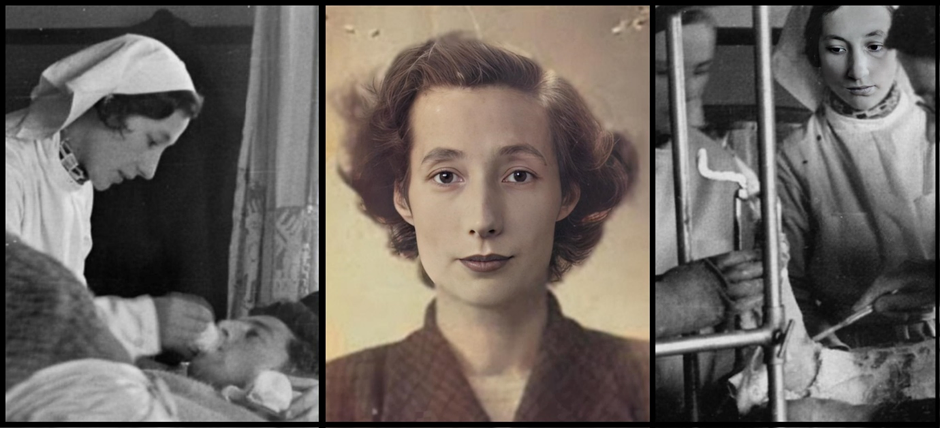
Thora Silverthorne, a name that echoes in the annals of 20th-century political and social history, was a Welsh nurse and communist activist whose life was deeply intertwined with the fight against fascism and the defence of democracy. Her involvement in the Spanish Civil War stands as one of the most significant chapters in her life, underscoring her dedication to justice, equality, and the rights of ordinary people.
Born in 1910 in Abertillery, South Wales, Thora grew up in a working-class family. Her father, a coal miner, was an active trade unionist, and his commitment to workers’ rights left an indelible mark on her values and aspirations. This upbringing imbued Thora with a deep understanding of the struggles of the working class and a determination to contribute meaningfully to their cause.
Joining the Fight for Democracy in Spain
In 1936, Thora Silverthorne answered the call to join the anti-fascist fight in Spain, a decision that would forever define her legacy. The Spanish Civil War (1936–1939) was a pivotal conflict that pitted the democratically elected Republican government against the Nationalist forces led by General Francisco Franco, who sought to establish a fascist dictatorship. The war quickly became an ideological battleground, drawing international volunteers who recognised the broader implications of Franco’s victory for global democracy and freedom.
Thora, who had trained as a nurse in London, joined the International Brigades, a multinational force of volunteers who came to Spain to support the Republican cause. She worked in field hospitals and on the front lines, providing critical medical care to soldiers and civilians alike. Her work was not merely a humanitarian effort but also a political act, rooted in her commitment to the defence of democracy in Spain and beyond.
The Importance of Spanish Democracy
For Thora and many of her contemporaries, the struggle for Spanish democracy symbolised the broader fight against fascism, which was gaining ground in Europe during the 1930s. The Spanish Republic represented hope for progressive governance, with its commitment to land reform, workers’ rights, and social equality. However, these ideals were anathema to Franco and his Nationalist allies, who were backed by Hitler’s Germany and Mussolini’s Italy.
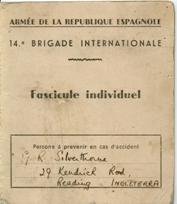
Thora’s International Brigade ID card.
The international support for the Republican cause was a testament to the widespread recognition of the stakes involved. A Nationalist victory would embolden fascist regimes across Europe, threatening democratic institutions and the freedoms they safeguarded. Thora understood this dynamic, and her decision to risk her life in Spain reflected her belief in the interconnectedness of global struggles for justice.
In her role as a nurse, Thora witnessed firsthand the brutal realities of war. The conditions were dire, with limited medical supplies and the constant threat of aerial bombardment. Yet she persevered, driven by her unwavering belief in the Republican cause. Her efforts saved countless lives and provided comfort to those who faced unimaginable suffering.
The Broader Impact of the Spanish Civil War
The Spanish Civil War was a precursor to World War II, a testing ground for the tactics and ideologies that would soon engulf the world. For many, the failure of Western democracies to adequately support the Spanish Republic was a grave mistake, one that emboldened fascist regimes and contributed to the eventual outbreak of global conflict.
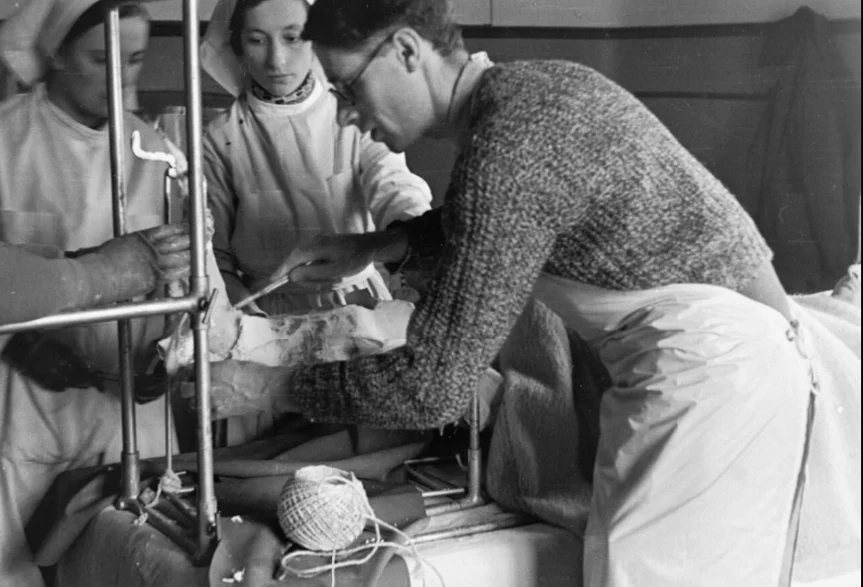
Thora (centre) overseas medical treatment of a patient during the Spanish Civil War with famous communist humanitarian worker Dr Alexander Tudor-Hart (right). For the original, click the image.
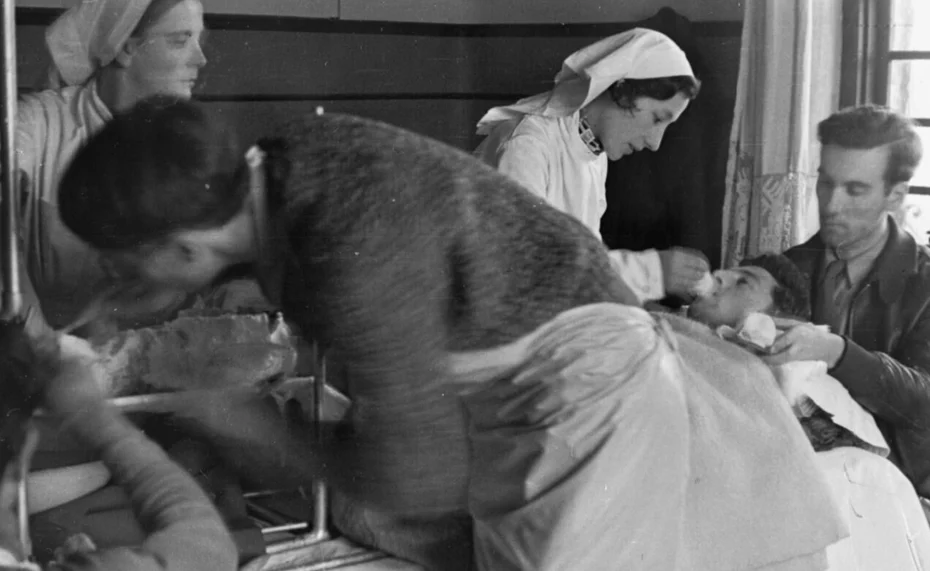
Thora (centre right) serving as a nurse during the Spanish Civil War, comforts a patient during orthopaedic surgery conducted by Dr Alexander Tudor-Hart.
Thora Silverthorne’s involvement in the war highlighted the moral imperative of taking a stand against oppression, even when governments failed to act. Her experiences in Spain deepened her political convictions, reinforcing her belief in the necessity of collective action and solidarity in the face of injustice.
The war also left a lasting impact on the international volunteers who fought and worked alongside Thora. Many of them returned to their home countries with a renewed commitment to anti-fascist and progressive causes, carrying forward the legacy of the Spanish Republic.
A Lifelong Commitment to Justice
After the Spanish Civil War, Thora continued her work as a nurse and activist. She became a founding member of the Socialist Medical Association, an organisation that played a crucial role in the creation of the National Health Service (NHS) in the United Kingdom. Her advocacy for accessible healthcare was a natural extension of her commitment to equality and the well-being of the working class.
Thora’s life serves as a reminder of the interconnectedness of struggles for justice, whether in the trenches of Spain, the coal mines of Wales, or the hospitals of Britain. Her legacy is one of courage, compassion, and an unyielding belief in the power of collective action to bring about meaningful change.
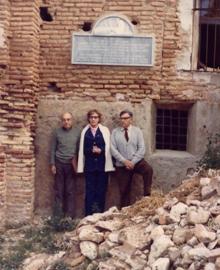
Thora visiting the ruins of a hospital near Barcelona in 1975 with Moises Broggi and the Hungarian doctor, Johnny Kiszelly.
Remembering Thora Silverthorne
Today, Thora Silverthorne is remembered as a symbol of resistance and solidarity. Her contributions to the Spanish Civil War and her lifelong dedication to social justice continue to inspire new generations of activists and historians. The lessons of her life remain profoundly relevant, especially in an era where democracy and human rights are again under threat in many parts of the world.
The Spanish Civil War, and Thora’s role in it, underscore the importance of standing up for democratic values, even in the face of overwhelming odds. Her story is a testament to the enduring power of ordinary individuals to make extraordinary contributions to the fight for freedom and equality.
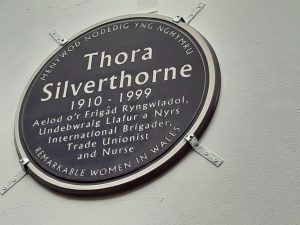
As a family we were delighted that a plaque remembering Thora was put up in her birthplace of Abertillery in 2023.